After · 9 min · Sources checked 14 September 2026
First-year medical care
The vaccine booklet, the community health station, a pediatrician, and what to do when your baby is sick at night.
The vaccine booklet
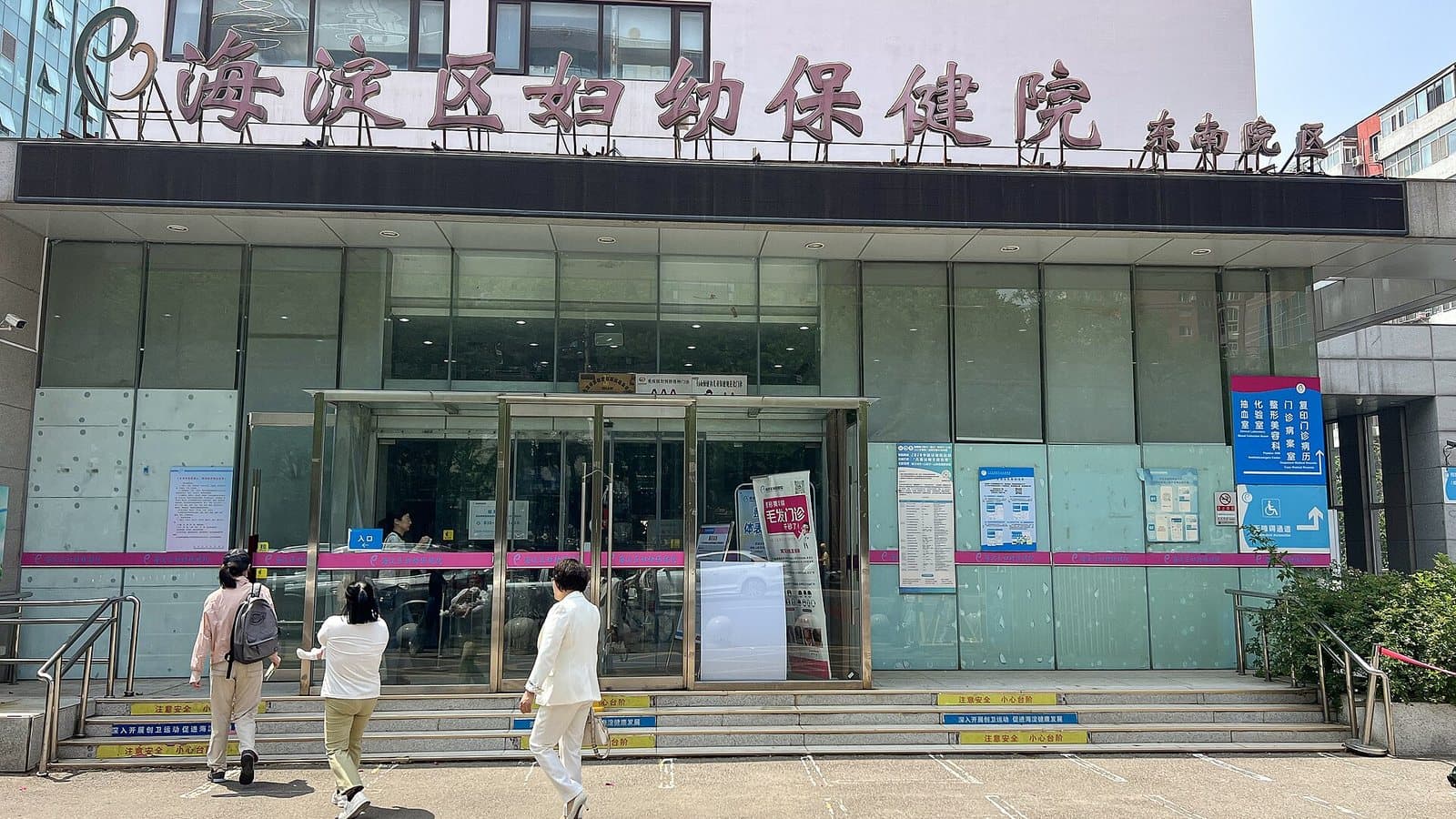
Before you leave the hospital, ask for the vaccination record, or go to your local community health station () within the first weeks. They issue a small booklet called . Keep it with the passports. Kindergartens and later schools will ask for it. Photograph every page after each visit.
Bring the medical birth certificate, both parents’ passports and residence permits, and the address on the permit. Registration is in Chinese. Bring a speaker or a written card with your baby’s name, date of birth, and your phone number.
How to find the community station
Search the compound name plus , or ask the compound guard. Each neighborhood has its own station, so families a few compounds apart may use different ones. You generally register where you live, not at the hospital where your baby was born. Hours are weekday daytime. Arrive early.
Free national vaccines and paid extras
China’s national program covers a core set at no charge at the community station. The 2021 national schedule gives hepatitis B within 24 hours of birth, then BCG, polio, DTaP (diphtheria, tetanus, pertussis), and group A meningococcal vaccine in the first year, with MMR and Japanese encephalitis also starting before the first birthday. Exact timing is printed in the booklet. Follow the station’s schedule even if it differs from your home country.
Vaccines that many foreign families pay for separately include rotavirus, pneumococcal (PCV13), Hib, varicella (chickenpox), and influenza. International hospitals stock some of these. The community station may offer some as paid items. Ask for the name in English and the manufacturer before you agree. If you will fly home in the first year, ask your embassy or a home-country pediatrician which extra doses they want to see.
Choosing a pediatrician
For routine growth checks, the community station or the child-health clinic at a nearby public hospital is the public path. English is limited. For English-speaking care, families use United Family, OASIS, or a private children’s clinic in Chaoyang and accept the higher fee.
Choose one place for fever and feeding questions so records stay together. Keep a written list of allergies, the vaccine dates, and your insurance card in the same folder as the booklet.
When your baby is sick at night
For a true emergency, call 120. Say the address in Chinese if you can, or hand the phone to a Mandarin speaker. Ambulances take you to a public emergency room, not to United Family, unless you can arrange a private transfer.
Know your nearest large public emergency department before the due date. In Haidian, many families use 北医三院. Beijing Children’s Hospital (北京儿童医院) in Xicheng is the city’s main pediatric hospital and is often crowded. United Family and OASIS have emergency desks if you can get there and can pay or bill insurance.
Go in now — do not wait until morning — if your baby is under three months with a fever, is struggling to breathe, will not wake to feed, has fewer wet diapers than usual, or you cannot stop the crying and your baby seems floppy or grey. Write those rules on a card on the fridge, in English and in Chinese.
Payment at the window
Community stations and public emergency rooms expect WeChat Pay, Alipay, or cash. Foreign bank cards often fail. If you do not have a local payment method, sort that out before the due date. International hospitals will take insurance cards they have on file, but only if your baby has already been added to the policy.
Sources
The rules above that come from these pages were checked on 14 September 2026. Hospital and office practice varies, so confirm before you act.